A condensing unit has a second heat exchanger that pulls heat out of the exhaust, so more of the gas becomes hot water, the flue gas is cool enough for plastic (PVC, CPVC or polypropylene) venting, and it drains an acidic condensate. A non-condensing unit costs less up front, has no condensate, and needs the vent material its manual lists, usually stainless steel.
What it means in flow
Our planner uses 0.95 for condensing and 0.77 for non-condensing units. At a 70°F winter rise a 199,000 BTU condensing unit holds about 5.4 GPM; a 199,000 BTU non-condensing unit about 4.4 GPM. ENERGY STAR's draft specification for gas instantaneous water heaters asks for a UEF of 0.95 or more, a level reached by condensing designs.
Venting and drains
- Condensing: plastic vent pipe, often one concentric termination; a condensate line to a drain, usually through a neutralizer.
- Non-condensing indoor: the maker's listed vent system, usually stainless; no condensate drain.
- Outdoor models of either type: no vent pipe.
Examples
Condensing: Rheem RTGH-95DVLN-3 199,900 BTU Natural Gas Condensing Tankless Water Heater, Rinnai CX199iN 199,000 BTU Condensing Tankless Water Heater and Rinnai RX199iN Condensing Tankless Water Heater. Non-condensing: A. O. Smith ATI-540P-N 199,000 BTU Natural Gas Tankless Water Heater, GASLAND CE686NG 199,000 BTU Natural Gas Tankless Water Heater and GASLAND E 199 199,000 BTU Natural Gas Tankless Water Heater.
Products mentioned
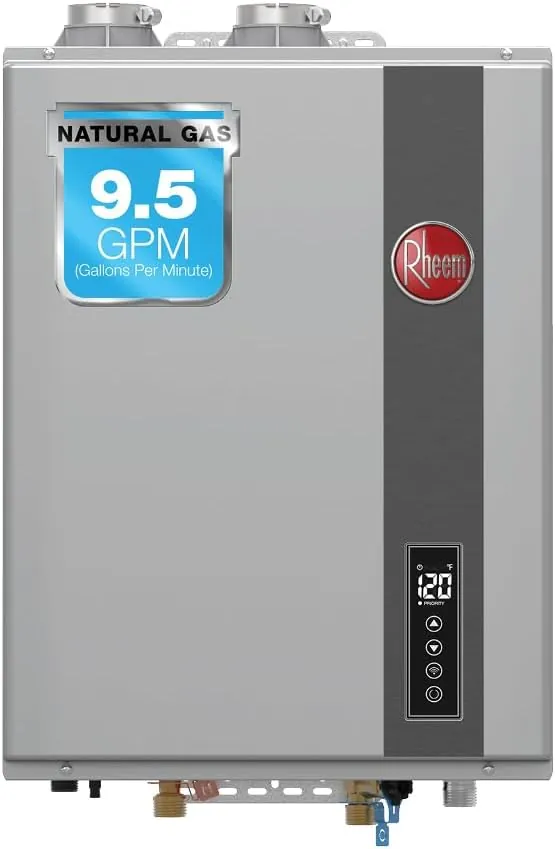
Rheem RTGH-95DVLN-3 199,900 BTU Natural Gas Condensing Tankless Water Heater
199,900 BTU/h · 9.5 GPM max
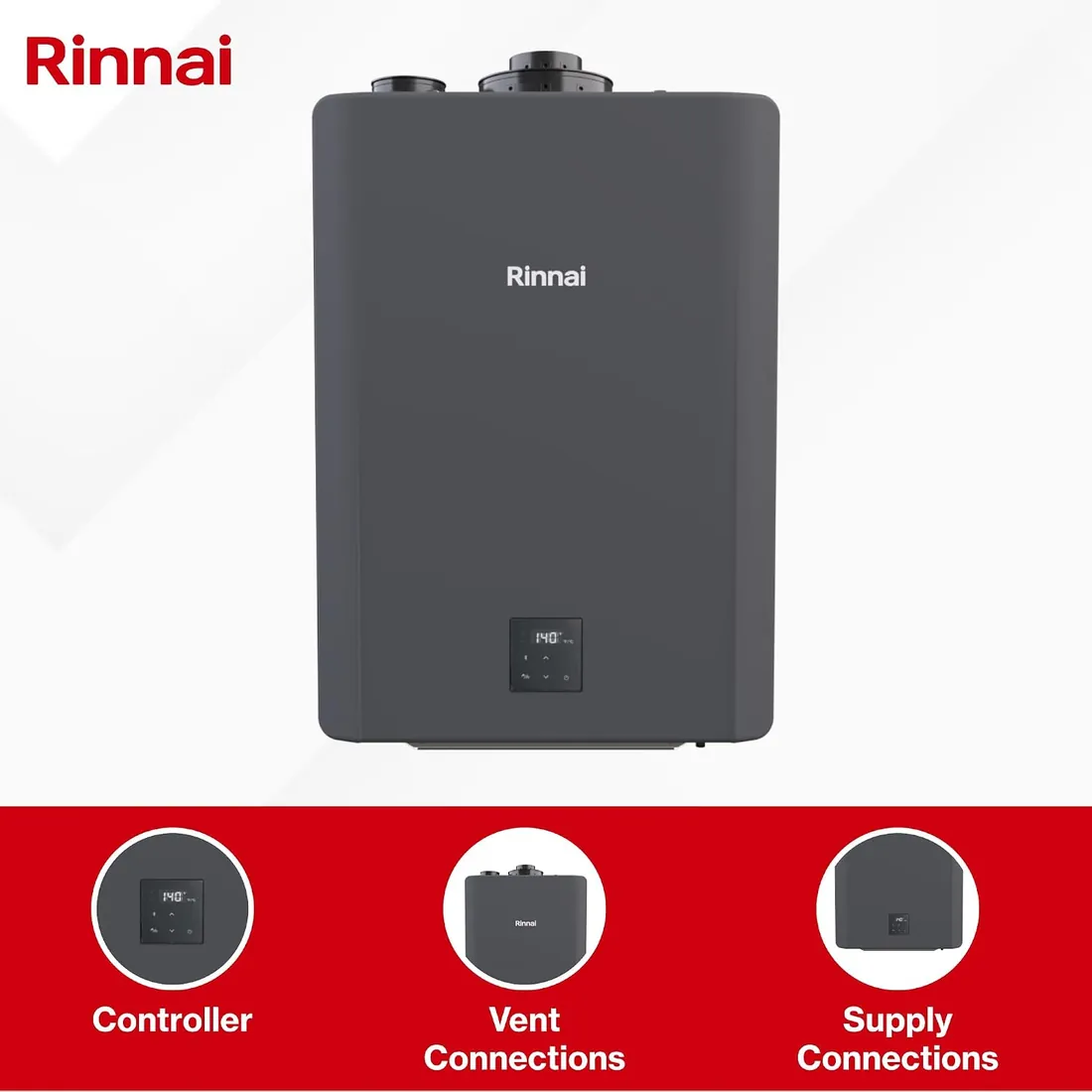
Rinnai CX199iN 199,000 BTU Condensing Tankless Water Heater
199,000 BTU/h · 11.1 GPM max · Propane
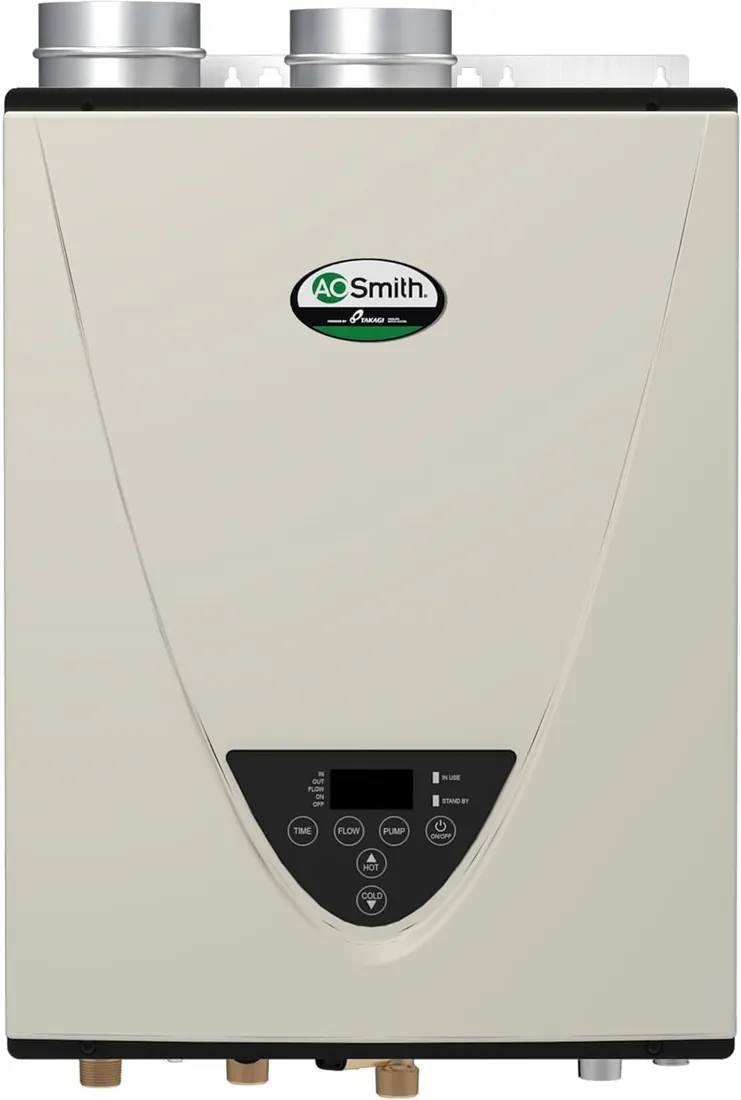
A. O. Smith ATI-540P-N 199,000 BTU Natural Gas Tankless Water Heater
199,000 BTU/h · 10.0 GPM max